Late Summer Farmlands Habitat Program
The 2026 application period ran June 1 – 22. Check back in March 2027 for next year’s program!
Shallow wetland habitat when shorebirds need it most
The objective of the BirdReturns-2026 Late Summer Farmlands Habitat Program is to incentivize farmers to create shallow wetland habitat for migrating shorebirds and other species when flooded habitat for migrating shorebirds is scarce in late summer and early fall. By maintaining shallow, mud-flat conditions on idle or harvested and unvegetated fields for a five-week period in August and September, farmers can provide critical habitat while supporting their farms and local communities.
Key Dates and Details — 2026
New in 2026
- Each individual field in your application must be entered on a separate line in your application
- The Migratory Bird Conservation Partnership is collaborating with the California Ricelands Waterbird Foundation to keep BirdReturns and Bid4Birds closely aligned
BirdReturns vs. Bid4Birds
The two habitat incentive programs are closely coordinated and their 2026 application periods overlap. You may apply to both — but each field can only enroll in one.
| Program | BirdReturns | Bid4Birds |
|---|---|---|
| Application period | June 1 – 22 | May 15 – June 10 |
| Program timing | Aug 3 – Sep 30 | Jul 15 – Oct 7 |
| Budget | $400,000 | ~$100,000 – $150,000 |
| Crop types | Broad suite of crop types | Rice fields |
| Habitat duration | 5-week contract (3-week flooding, 2-week drawdown) | 3–4-week contract plus evaporative drawdown |
| Mosquito abatement fees | Fully reimbursable if habitat conditions are met prior to flood-up | Must be included in bid if needed |
Is Your Field Eligible?
✓ Eligible fields
- Capable of maintaining flooding — some past fields were too permeable to hold water
- Located in the Sacramento–San Joaquin Delta or the Sacramento Valley
- Minimum 30 acre fields (contiguous smaller fields may be accepted)
- Open fields with no trees or vines within or immediately adjacent
- Access to ground and/or surface water
- Idle, rotating/resting, or harvested crops/croplands before the late summer target habitat period and meeting vegetation requirements.
- Crop Types include but not limited to: wheat and other cereal grains, garbanzo beans, tomatoes, potatoes, sunflower, safflower, corn, or rice.
✕ Not eligible
- Fields enrolled in another incentive program (e.g., NRCS EQIP) paying for flooding in the same window
- Fields within 5 miles of major airports, including Sacramento International and Travis AFB
- Fields smaller than 30 acres
- Fields close to population centers or within mosquito hot spots, depending on local conditions. Areas indicated in (but not limited to) this map will be more carefully assessed during selection. Please reach out to the BirdReturns program manager (jbarfield@tnc.org) prior to applying if all or a portion of your field is located within these areas.
Program Requirements
Participants may enroll for any continuous five-week period between August 3 and September 30, 2026. All enrollments begin on a Monday, and all enrolled acreage must be fully flooded by the selected start date.
Step 1
Pick a start date
Start on any Monday between August 3 and 31. Changes after enrollment require written approval.
Step 2
Manage vegetation
Little to no standing vegetation so shorebirds can forage — stubble or emergent vegetation must not exceed 10% cover. In fields that have recently been in production, incorporation of crop residue must take place to expose the soil.
Step 3
Flood | Weeks 1–3
Maintain mudflat or ponded conditions to a maximum depth of 4 inches, with at least 75% of each field covered by water.
In sloping fields, the shallow end should have moist soil conditions or mudflats. The deep end may be greater than 4 inches. However, fields will be deemed out of compliance if uniformly deeper than 4 inches.
Step 4
Drawdown | Weeks 4–5
Let standing water evaporate. Don’t pull boards to drain or remove check levees.

Costs to Consider in Your Bid — You set the Price
Different from most other habitat incentive programs which offer participants compensation at a fixed rate, the BirdReturns Late Summer Farmlands Habitat Program requires applicants to submit bids that are informed by their unique costs and individual circumstances.
To prepare a competitive bid price, BirdReturns encourages applicants to consider the real costs they will incur to comply with the practice requirements. Costs to consider in preparing a bid include:
- Field prep — disking, pulling berms, pulling drains
- Water supply
- Additional labor and field visits to stay in compliance
- Energy costs
Vector control costs on enrolled fields are fully reimbursable in 2026 if vegetation requirements are met before flood-up.
Exclude mosquito treatment costs from your bid. Applicants should submit a bid price that excludes potential vector control treatment costs. These costs, if incurred by the participant for enrolled fields, will be fully reimbursable by BirdReturns for the Late Summer Farmlands Habitat Program in 2026. The process for submitting these expenses for reimbursement will be described in all contracts issued for this year’s program.
Additional Program Information
Any combination of the following post-harvest crop stubble treatments and incorporation practices may be used to achieve a uniform level surface in the field and remove organic matter. These treatments are strongly recommended to comply with the program’s vegetation management requirements, achieve uniform flooding, and reduce the likelihood of mosquito propagation. Note: the following methods work for typical fields, but fields with excessive vegetation may require more passes to meet program requirements of emergent vegetation of 10% or less.
-
- single stubble disc or chisel pass followed by single pass with a finish disc or a roller
-
- double pass with a stubble disc
-
- burn, chop, or bale followed by one of the discing combinations above
Although adequate vegetation removal and field prep will reduce mosquito propagation, enrolled fields may be treated by mosquito/vector control districts.
All interested applicants must contact their local district representatives to notify them of their possible program enrollment and flooding dates. Growers can find their mosquito vector control district here: https://shorturl.at/zDGJS. In addition, BirdReturns program managers will notify mosquito and vector control districts of fields enrolled in the program upon property selection and landowner confirmation of willingness to enroll.
Mosquito Treatment Reimbursement: Mosquito abatement costs incurred during the habitat period on enrolled fields will be fully reimbursable by BirdReturns for the Late Summer Farmlands Habitat Program in 2026 if vegetation management requirements have been met prior to field flood up. Participants are responsible for paying their Mosquito and Vector Control District directly. For reimbursement, participants must submit all mosquito abatement invoices to BirdReturns staff.
New in 2026: Participants may submit as many acres as they would like, but a 500-cap will be in effect per property, unless more funding becomes available.
The selection committee will assess bids according to standardized methods, using the best available science and tools that predict the habitat value of each bid. A diversity of crop types will be selected to help build habitat resiliency across the landscape.
Sites will be scored and ranked based on bid price and characteristics important to habitat quality such as overall acreage, field size and location, timing and duration of flooding, and history of bird use in the general area.
Due to a smaller budget in 2026, we expect increased competition this year. Applicants that have earlier start dates and offer competitive pricing will rank higher. Previous participants who met program requirements will receive additional weighting in their bid scores, although first time participants are also encouraged to apply.
We reserve the right to reject any bids that are determined to be unreasonably priced.
What good habitat looks like
Shallow, mudflat-like conditions with minimal stubble attract the most waterbirds. Photos © Greg Golet.

Ideal waterbird habitat with mudflat-like conditions

Too much standing crop stubble; water too deep

Great shallow flooded habitat, attracting lots of waterbirds
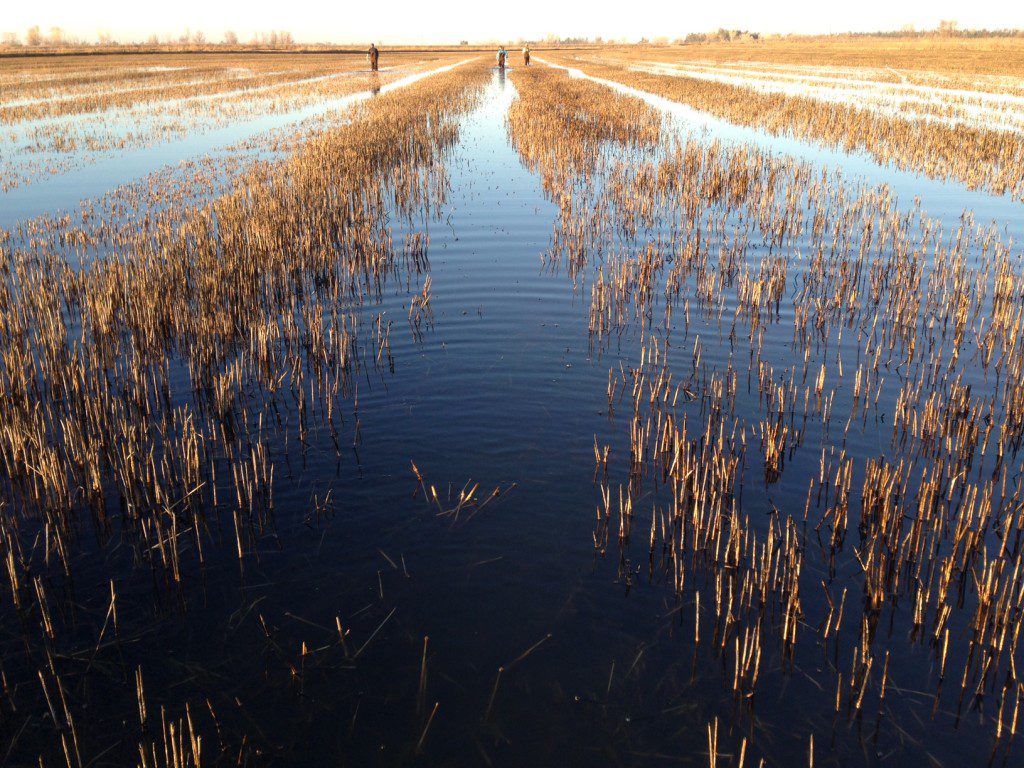
Thick, matted vegetation makes it difficult for waterbirds to forage
Why the Late Summer Farmlands Program Matters
Shallow Water, Essential Habitat
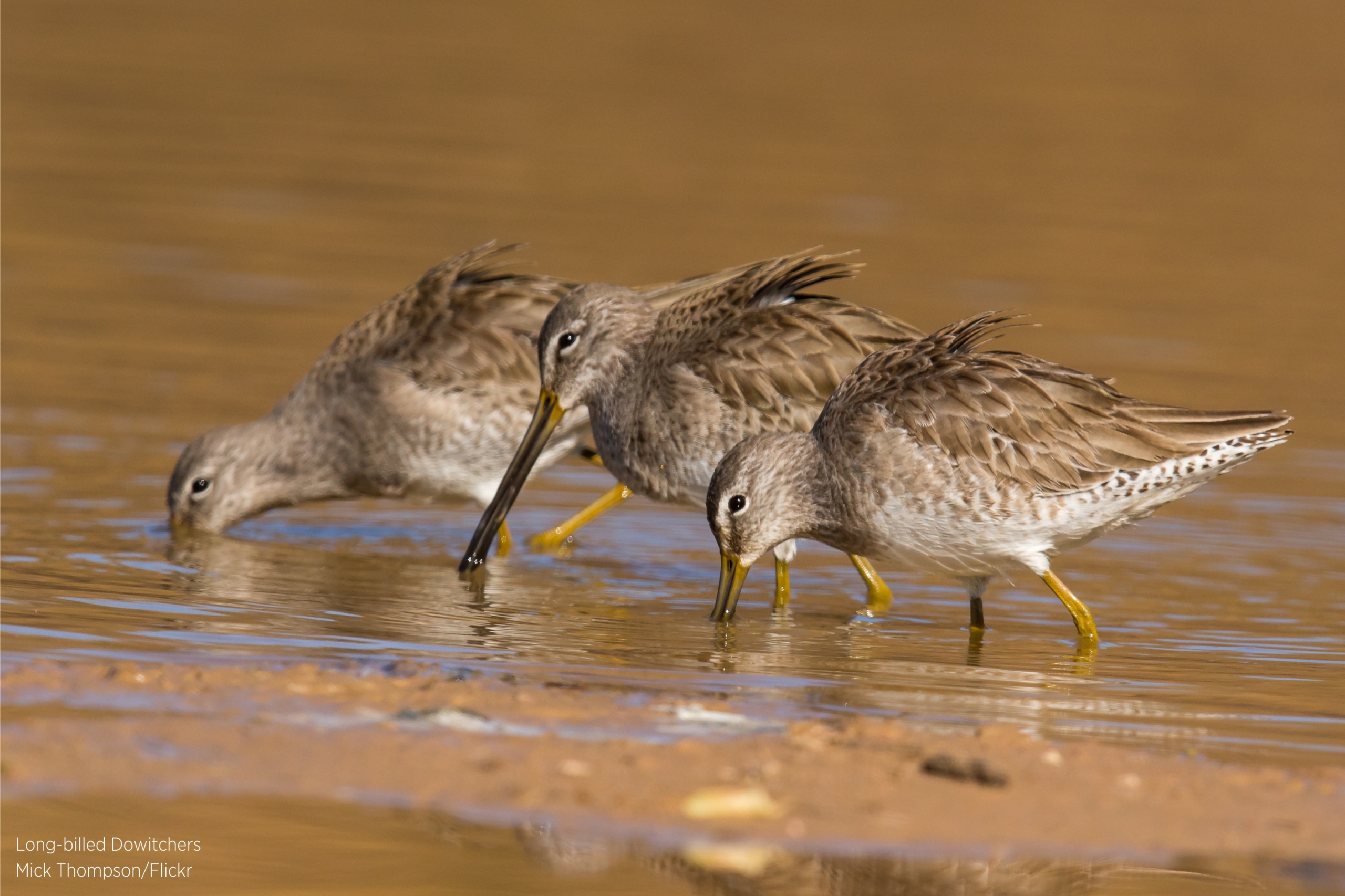
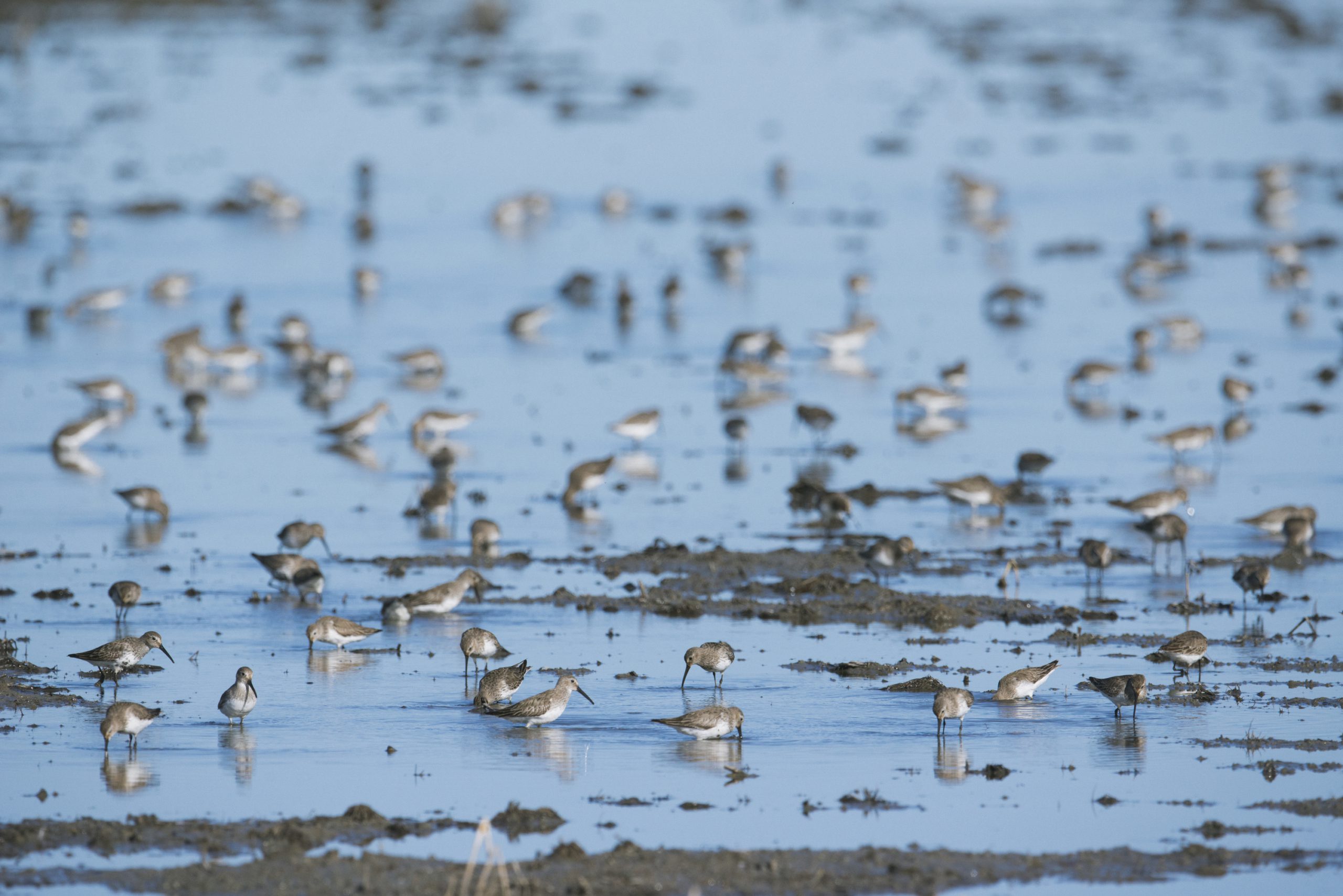
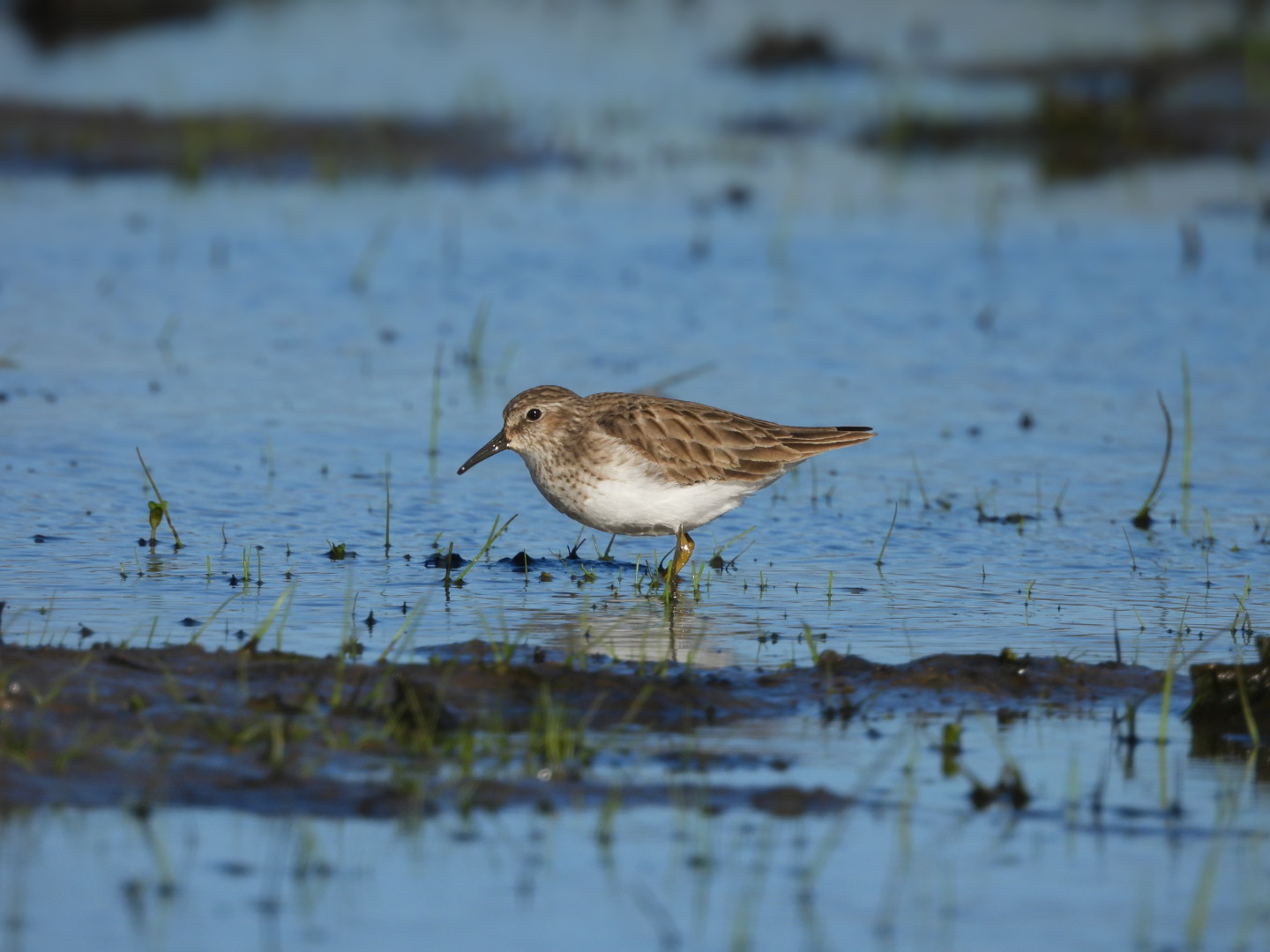
Shallow-flooded farmland fields and exposed mudflats provide the food and resting areas these birds need to refuel during migration.
A Migratory Lifeline
In late summer and early fall, flooded habitat is scarce across California’s Central Valley. With most historic wetlands lost, migratory shorebirds and other wetland-dependent species increasingly rely on post-harvest flooded agricultural fields as critical stopover habitat. The Late Summer Farmlands Program helps ensure that shallow-flooded habitat remains on the landscape at critical times of year.