

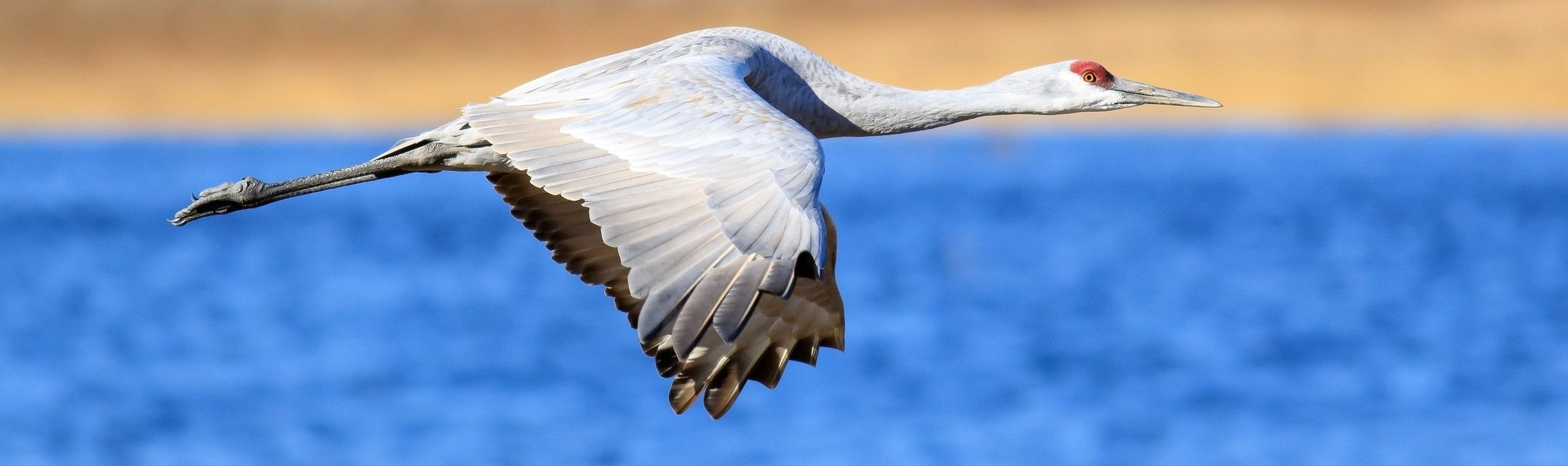
Sandhill Crane Program
The 2026 application period ran from August 24 – September 11, 2026. All bids are final once the application period is closed.
Wintering habitat for the Greater Sandhill Crane
For more than a decade, BirdReturns has partnered with farmers and landowners to create vital habitat for migratory birds across California. Through the Sandhill Crane Program, farmers in the Sacramento Valley and Delta are helping provide the wintering, foraging, and roosting habitat that Greater Sandhill Cranes need to thrive. These seasonal wetlands and flooded fields also support a rich diversity of waterfowl, shorebirds, and other waterbirds, creating benefits for wildlife across the Central Valley.
New this year:
We are limiting the fall and winter start dates this year due to predictions by climate experts of an “historic” El Niño this fall, which is expected to exceed the strength of all previous events on record since 1950.
Program at a glance — 2026
Two ways to participate
Growers may provide foraging sites, roosting sites, or both in combination.
| Requirement | Roosting habitat | Foraging habitat |
|---|---|---|
| Purpose | Sanctuary habitat where cranes and other waterbirds congregate overnight, safe from predators. | Feeding locations near night roosts, left dry and unflooded to maximize available food. |
| Field Size | Minimum 30 acres; Contiguous fields may be combined to meet minimum acreage requirements, including intervening levees. | Minimum 50 acres; Contiguous fields may be combined to meet minimum acreage requirements, including intervening levees. |
| Field Conditions | Open field with no/minimal emergent vegetation or tree borders. Minimum 100m width with no continuous tree lines. | Fields may have some trees on their edges, but fewer trees are preferred. |
| Flooding | Maintain shallow depths of 3–9 inches; Fields must be fully flooded by enrollment start date. In sloping fields, the shallow end may be less than 3”, and the deeper end greater than 9”. Flood management should be done to maximize the desired depth range (3-9”) across the field. **A two-week gradual drawdown period is required for the final two weeks (weeks 7-8) for the winter/spring enrollment periods. | Optional: May begin a slow flood-up (max 2″) beginning 6th week of enrollment onward |
| Field Type | Post-harvest or fallow ag fields. Fields without leftover grain preferred, so food remains available on the surface. | Harvested and untilled |
| Enrollment Period | 8-week minimum | 8-week minimum |
| Hunting | No hunting on roost fields or fields directly adjoining | Hunting optional on enrolled forage fields that do not adjoin roost fields. (Fields that forgo hunting will score higher) |
| Crop Types | Rice, corn, barley, wheat, triticale, oats and other grains, sunflower, etc. | Harvested rice, corn (not silage corn), or other fields (e.g., barley, wheat, oats, etc.) where grain was grown in 2026 |
| Field Management | Tillage (disking, chiseling, etc.), baling, stomping, chopping, etc. Incorporation of crop residue or weeds may be needed. | Rice: conventional harvest, stubble may stand or be chopped. Corn: harvested and chopped/mulched, no tillage (disking, chiseling, etc.) before enrollment ends. *Other crop types should be managed similarly. No burning, baling, tilling (e.g., disking, chiseling, etc.), or stomping is allowed on forage fields |
Habitat complexes combining both types (up to 500 acres total) are welcome, and social-attraction techniques (decoys, crane vocalizations) may be used on some fields to help attract birds — participation in that study is optional.
Is your field eligible?
✓ Eligible
- Properties located in Sacramento Valley and the Sacramento San-Joaquin Delta. Sites located in Butte, Contra Costa, Colusa, Glenn, Placer, San Joaquin, Sacramento, Solano, Sutter, Yolo, and Yuba Counties, California.
- Owners with access to ground and/or surface water
- Roost fields must have reliable water access
- Minimum 100m width with no continuous tree lines
✕ Not eligible
- Fields enrolled in another incentive program (e.g., NRCS EQIP) paying for flooding during an overlapping window
- Fields within 5 miles of major airports, including Travis AFB, Beale AFB, and Sacramento International
- Fields where any hunting occurs, including roost fields and fields directly adjacent to them
- Roost fields with trees along their borders
- Forage fields are not eligible if they were idle in 2026 or flooded after the 2026 harvest.
Program Steps
Enrollment is a continuous 8-week period between October 5, 2027 and April 4, 2027. All enrollments options (1-7) begin on a Monday.
Step 1
Verify start date
Choose from enrollment seven options between October 5, 2026 and April 4, 2027.
Failure to meet start dates may result in a payment reduction.
Step 2
Field Preparation
Complete roosting and/or foraging habitat field prep requirements. BirdReturns representation will verify field conditions in preparation of start date.
Step 3
Maintain Habitat
Maintain habitat requirements for minimum of 8-weeks.
Enrollment Options and Pay Rates
- Farmers can apply for any of the following enrollment periods, or both.
- On applications to provide both foraging and roosting habitat for the fall/winter enrollments, the dates of each habitat type must be the same.
| Enrollment period | Enrollment options | Habitat Type | Start Date | End Date | Fixed Rate Per Acre |
|---|---|---|---|---|---|
| Fall/Winter | Option 1 | Roost/Forage/Both | October 5, 2026 | November 29, 2026 | $90 |
| Fall/Winter | Option 2 | Roost/Forage/Both | October 12, 2026 | December 6, 2026 | $90 |
| Fall/Winter | Option 3 | Roost/Forage/Both | October 19, 2026 | December 13, 2026 | $90 |
| Fall/Winter | Option 4 | Roost/Forage/Both | December 7, 2026 | January 31, 2027 | $90 |
| Winter/Spring | Option 5 | Roost Only* | January 18, 2027 | March 14, 2027 | $95 |
| Winter/Spring | Option 6 | Roost Only* | February 1, 2027 | March 28, 2027 | $95 |
| Winter/Spring | Option 7 | Roost Only* | February 8, 2027 | April 4, 2027 | $95 |
What Good Habitat Looks Like
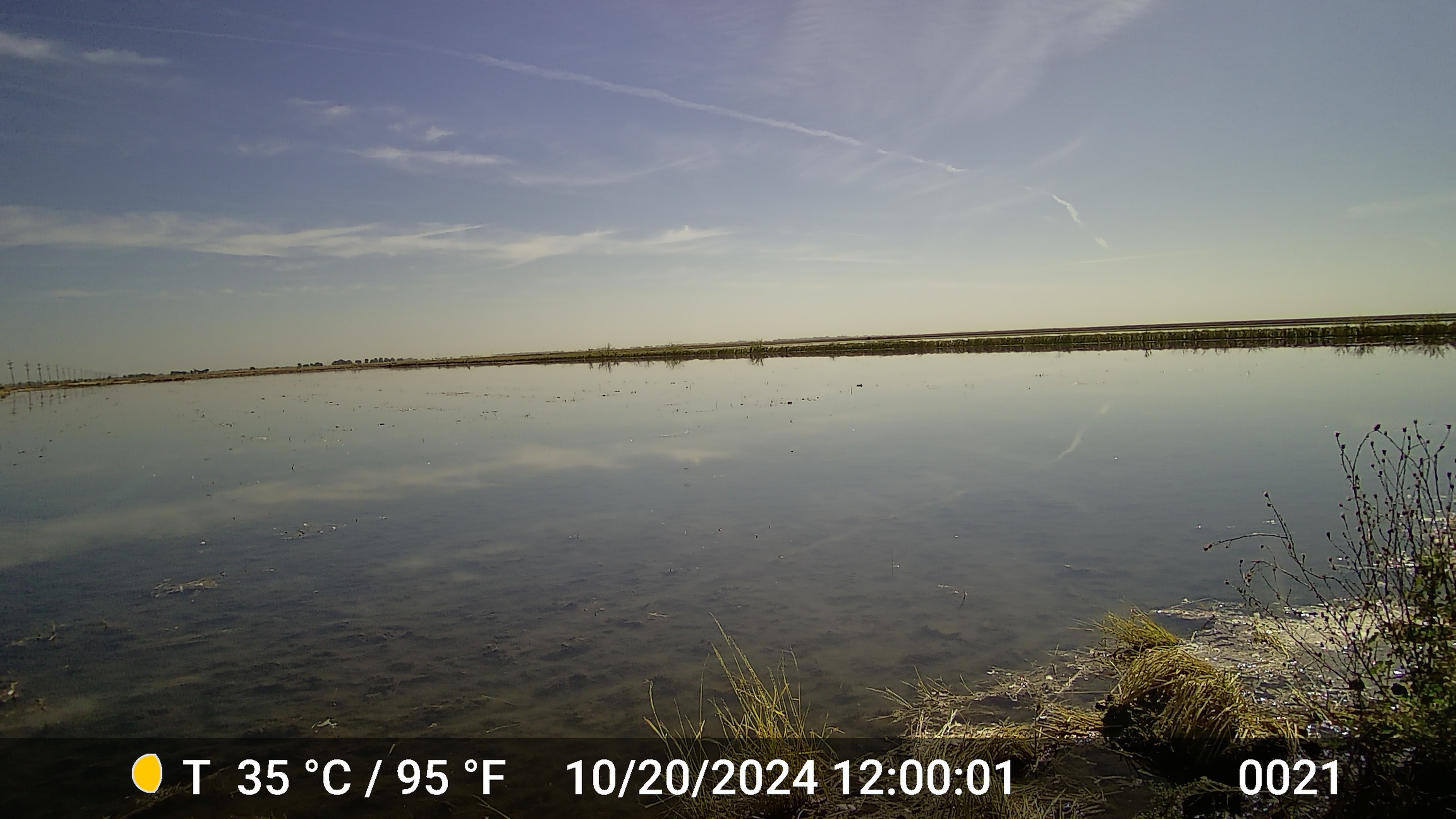
Ideal roosting habitat. Open field with no/minimal emergent vegetation or tree borders, flooded 3-9”
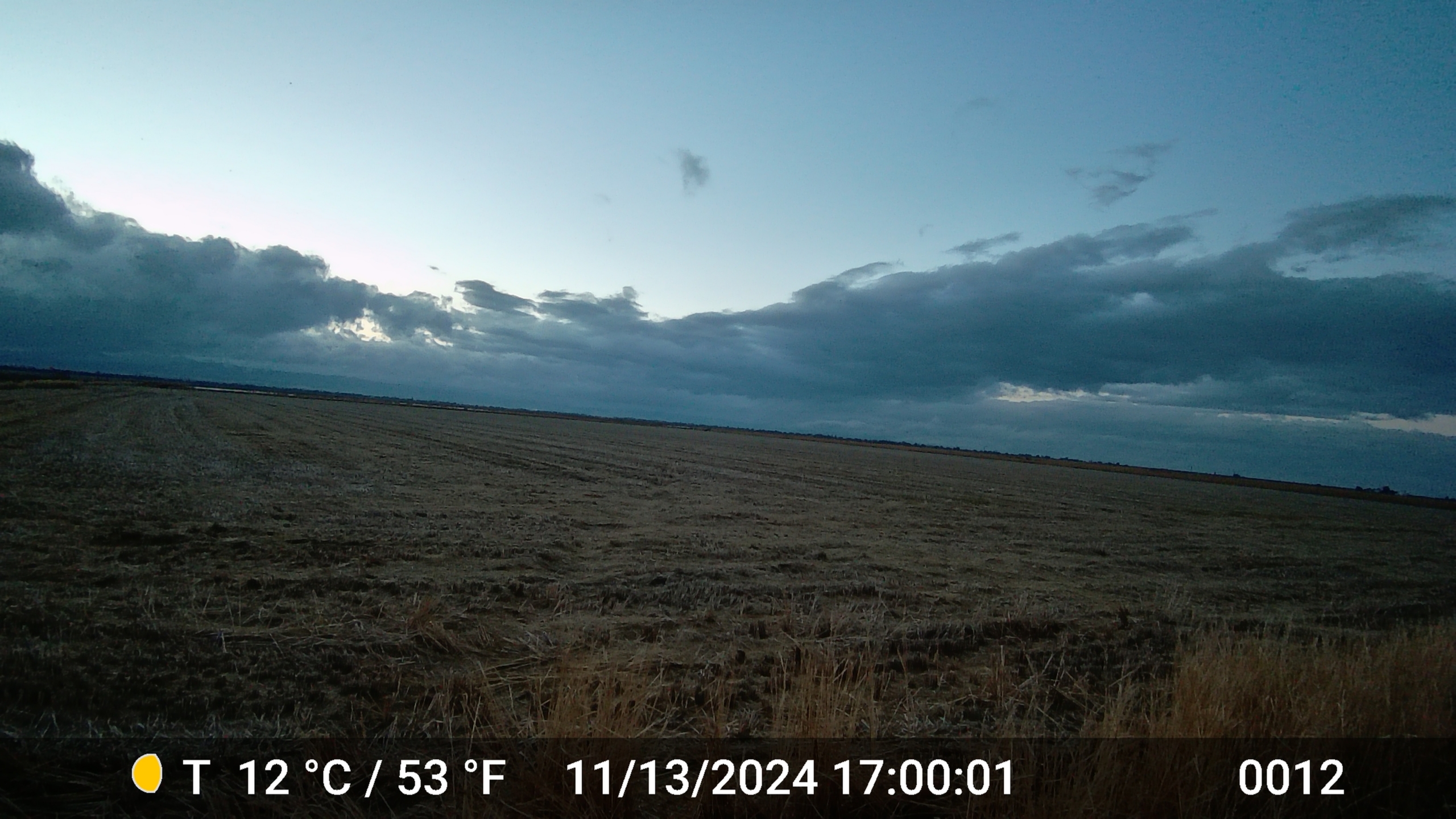
Ideal foraging habitat. Harvested grain field, chopped, rolled, or shredded, with no tillage, and not flooded.
Additional Program Information
All applications will be ranked and scored by representatives from the Migratory Bird Conservation Partnership and the California Department of Fish and Wildlife. The selection committee will assess applications according to standardized methods, using the best available science and tools to predict the habitat value of each application. Fields will be given a score based on position in the landscape relative to historical roost sites, land cover, surface water availability, and timing. Representatives from the Migratory Bird Conservation Partnership and the California Department of Fish and Wildlife will meet on September 24, 2026, to review all applications.
Highest priority will go to applications in regions of known historic use by cranes, as informed by roosting maps and scientific literature.
- For fall/winter enrollments, habitat complexes containing both roosting and foraging habitat will be prioritized
The enrollments will be ranked proportionally higher the earlier the habitat begins. October 5 start dates will be ranked more highly than October 12, October 19, and December 7 start dates, and October 12 start dates will be ranked more highly than enrollments beginning on October 19 and December 7, October 19 start dates will be ranked more highly than December 7 start dates. In addition, applicants willing to forego hunting on forage fields will be preferentially selected.
- For winter/spring enrollments:
The enrollments will be ranked proportionally higher the later the habitat is maintained. Feb. 8 start dates will be ranked more highly than Feb. 1 and Jan. 18 start dates, and Feb. 1 start dates will be ranked more highly than Jan. 18 start dates.
The highest-scoring applications will be selected until the acreage goal is met and/or the budget is spent. If an applicant submits multiple applications on a property, initially only the highest scoring application from each property will be accepted. Once all properties have been considered, if the acreage goal has not been met and budget remains, additional applications from each property will be considered in ranked order. We reserve the right to reject any applications that are outside of the program requirements, intent, or team capacity. Feel free to contact us if you would like to discuss what type of habitat (roosting and/or foraging) is most desirable for your specific location (for fall/winter start dates), or if you would like additional explanation about the scoring criteria.
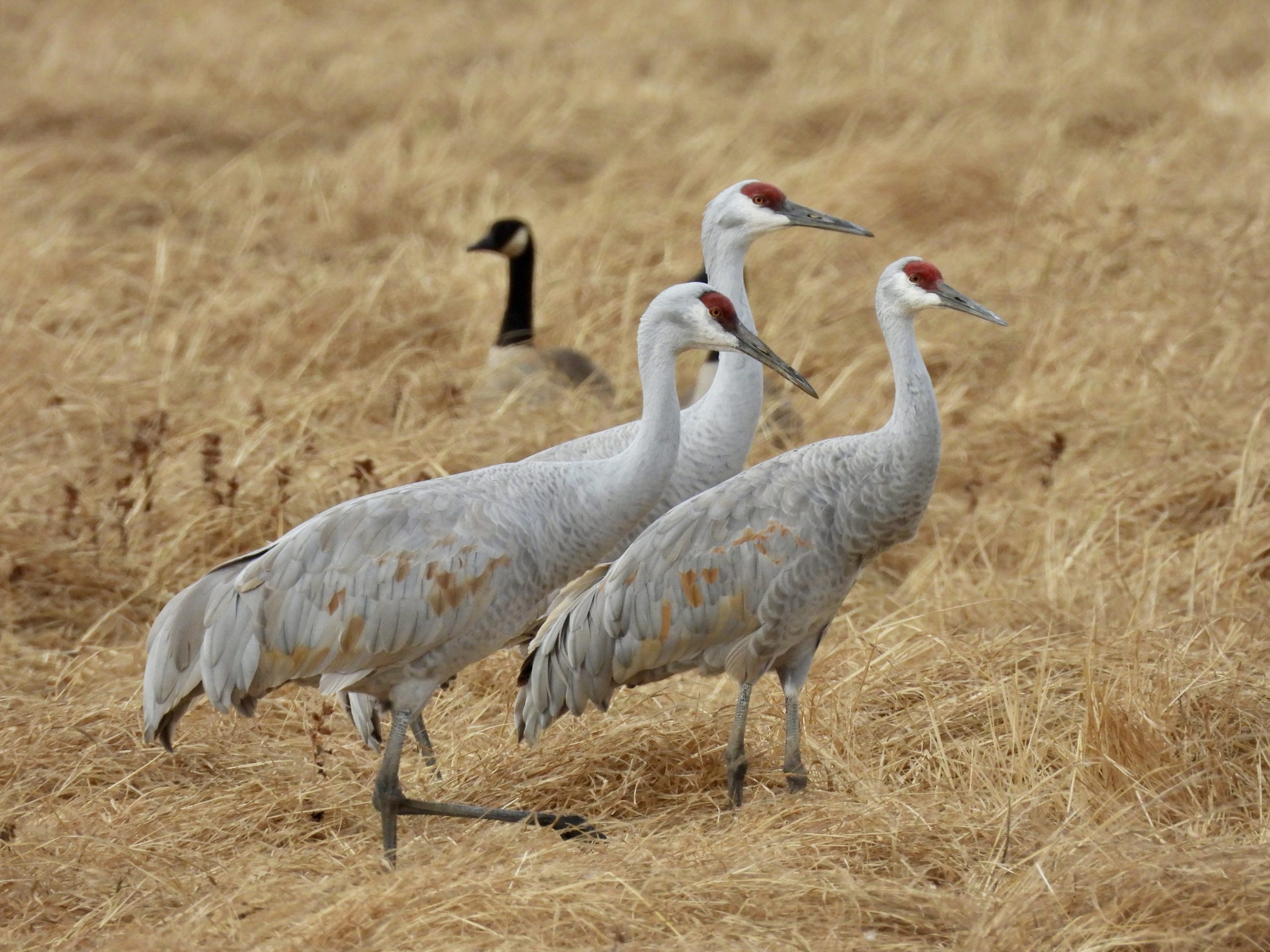
Supporting Sandhill Cranes on California Working Lands
Sandhill cranes are among the world’s most vulnerable bird groups, and California’s wintering populations face growing challenges. The loss of seasonal flooded habitat, along with the decline of small grain agriculture that provides important food resources, has reduced the habitat these iconic birds depend on each winter. As wildlife-friendly crops such as corn and rice are converted to permanent crops like orchards and vineyards, fewer suitable places remain for cranes to roost and forage.
Because many Sandhill Cranes return to the same wintering areas year after year, the loss of historic habitat can make it difficult for them to find safe, alternative sites.
The good news is that relatively simple land management practices can make a significant difference. By creating shallow-flooded roosting habitat and maintaining nearby harvested fields for foraging, farmers can provide the resources cranes need to thrive during the winter months.
Our Sandhill Crane Program partners with farmers to support these efforts through incentive-based habitat stewardship. Together, we are increasing the availability of high-quality winter habitat and helping cranes adapt to a changing landscape.
By supporting a connected network of wetlands and wildlife-friendly working lands, we can help ensure a future for Sandhill Cranes while also benefiting other wildlife, agricultural communities, and the long-term resilience of California’s Central Valley.
Sign up to stay updated
Get latest news and notices from birdreturns.org
"*" indicates required fields